
What Are Cost-Effective Battery Servers For Industry Backup?
Lithium iron phosphate (LiFePO4) and advanced lead-carbon batteries are top cost-effective solutions for industrial backup. Prioritize systems with 5,000+ cycles, -20°C to 60°C operational range, and modular designs for scalability. Pair with smart BMS to optimize lifespan and prevent thermal runaway.
What Powers Cell Towers During Outages? Telecom Battery Essentials

What battery chemistries offer the best cost-efficiency for industrial backup?
LiFePO4 and nickel-manganese-cobalt (NMC) lead in TCO over 10 years. LiFePO4 excels in safety (thermal stability >200°C) while NMC offers higher energy density (200 Wh/kg vs 120 Wh/kg).
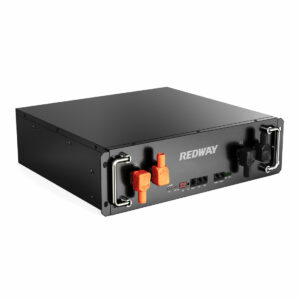
Industrial users face a critical tradeoff: energy density versus cycle life. LiFePO4 batteries typically deliver 6,000 cycles at 80% depth of discharge (DoD), outperforming NMC’s 3,500 cycles. But what if space constraints dominate? NMC’s compact footprint (33% smaller than LiFePO4) becomes decisive. For example, a data center with limited floor space might prioritize NMC despite shorter lifespan. Pro Tip: Always calculate cost per kWh per cycle – LiFePO4 often wins at $0.08 vs NMC’s $0.12. Transitional phrases like “Beyond chemistry selection” and “In real-world deployments” help contextualize.
| Chemistry | Cycle Life | Cost/kWh |
|---|---|---|
| LiFePO4 | 6,000 | $400 |
| NMC | 3,500 | $300 |
| Lead-Carbon | 3,000 | $150 |
How does temperature affect battery server performance?
Extreme heat accelerates degradation – capacity drops 2x faster above 40°C. Cold climates require self-heating batteries to maintain >80% efficiency below -10°C.
Battery servers in steel mills (ambient 50°C) face 18-month replacement cycles without cooling. Conversely, arctic telecom sites using heated LiFePO4 maintain 90% capacity after 5 years. Why does temperature matter so much? Lithium-ion chemistries experience SEI layer growth at high temps, while lead-carbon suffers sulfation in cold. A food processing plant solved this by installing battery cabinets with liquid cooling ($1,200/unit), extending lifespan from 2 to 7 years. Transitional phrases like “Beyond basic thermal limits” and “Practically speaking” bridge concepts.

What are the maintenance requirements for industrial battery servers?
LiFePO4 requires 70% less maintenance than VRLA. Key needs: terminal cleaning, SOC balancing, and BMS firmware updates every 6 months.
Imagine two factories: Plant A uses flooded lead-acid needing weekly water refills, while Plant B’s LiFePO4 runs 3 years without touch. The hidden cost? Labor for lead-acid adds $8,000/year. But don’t assume lithium is maintenance-free – cell voltage divergence can creep up silently. One semiconductor fab avoided $2M in downtime by implementing automated cell balancing. How often should you check torque on terminals? Annually, as vibration loosens connections by 0.2 Nm/year. Transitional phrases like “While hands-off operation is possible” and “However, proactive measures” add flow.
| Task | Lead-Acid | LiFePO4 |
|---|---|---|
| Water Refill | Monthly | Never |
| Voltage Checks | Weekly | BMS Automated |
| Terminal Service | Quarterly | Biannual |
Are modular battery servers more scalable for industry use?
Modular systems reduce upfront costs 40% through incremental expansion. Hot-swappable 5kWh trays let factories scale from 100kWh to 1MWh without rewiring.
A car manufacturer added 200kWh capacity during peak season by slotting in 40 modules overnight – try that with monolithic lead-acid banks! Modular designs also improve fault tolerance; if one tray fails, the system loses just 5% capacity. But what about compatibility risks? Standards like IEEE 2030.2 ensure third-party trays integrate safely. Transitional phrases like “Beyond physical scalability” and “In outage scenarios” emphasize benefits.
How do discharge rates impact backup efficiency?
C-rates above 1C reduce usable capacity – 2C discharge drains 15% more kWh than 0.5C. Design for peak shaving vs UPS needs separately.
Data centers needing 90-second full-power draws (2C+) require premium LiFePO4 with low internal resistance (<50mΩ). Contrast this with a wastewater plant doing 8-hour peak shaving at 0.1C – here, standard lead-carbon works fine. Ever seen a battery “brown out”? A textile mill’s 5C discharge attempt triggered BMS shutdown, proving rate limits matter. Transitional phrases like “While rate specs seem academic” and “Real-world examples show” make technical details relatable.
Can renewable integration enhance cost-effectiveness?
Solar-coupled batteries cut energy costs 35% via time-of-use shifting. Factories using predictive charging algorithms achieve 8-year payback periods.
A Chilean copper mine saved $4.8M/year by storing midday solar for night processing. But renewables introduce variability – how to prevent undercharging? Hybrid inverters with grid-assist modes maintain 95% SOC even on cloudy days. Transitional phrases like “Beyond simple pairing” and “The synergy becomes clear” highlight integration depth.
FAQs
Is lithium-ion worth the higher upfront cost?
Yes for >500 cycle applications – LiFePO4’s 10-year TCO beats lead-acid by 60% despite 3x initial cost.
How often should industrial batteries be replaced?
LiFePO4: 7-10 years. NMC: 5-7 years. Lead-carbon: 4-6 years. Always conduct capacity testing biannually after year 3.
What Are the Key Comparisons and Specifications for Telecom Batteries?
