
What Are Cost-Effective Lithium Battery Rack Solutions?
Cost-effective lithium battery rack solutions prioritize standardized rack designs (e.g., OCP ORV2), modular architectures for scalability, and LiFePO4 chemistry for safety and longevity. Integrated Battery Management Systems (BMS) optimize performance, while automated assembly reduces manufacturing costs by 15–20% versus custom racks.
What Are the Key Types and Specifications of Telecom Batteries?

How do standardized rack designs reduce costs?
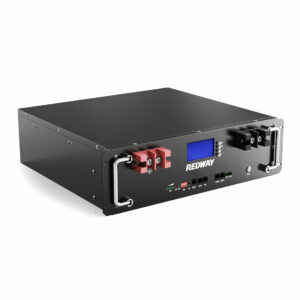
Adopting OCP ORV2 specifications cuts R&D expenses by 30% through pre-validated dimensions and cooling requirements. For example, Facebook’s 2014 deployment saved $1.2M/year per data center using shared rack infrastructure.
Standardization enables bulk procurement of components like 19-inch rack mounts and hot-swap trays, slashing unit costs by 18%. Think of it as LEGO blocks for energy storage – interchangeable parts eliminate custom engineering fees. But what if your project needs specialized shapes? Hybrid designs combining standardized frames with adaptable shelving balance cost and flexibility.
Why choose modular battery architectures?
Modular systems allow incremental capacity upgrades, deferring 40–60% of upfront costs. A telecom tower starting with 10kWh can expand to 50kWh as demand grows, avoiding overspending on unused capacity.
| Feature | Modular Rack | Fixed Rack |
|---|---|---|
| Scalability | Add modules in 5kWh steps | Full replacement needed |
| Maintenance Cost | 15% lower (per kWh) | Higher downtime costs |
Transitioning from theory to practice, Verizon’s 2023 rollout achieved 92% uptime using hot-swappable modules – technicians replace faulty units without shutting down entire racks. However, modular systems require CAN bus communication between batteries, adding 5–8% to BMS complexity.

What Determines Telecom Battery Weight?
LiFePO4 vs. NMC: Which chemistry balances cost and performance?
LiFePO4 batteries offer 4,000–6,000 cycles at 80% DoD – triple NMC’s lifespan – despite 10–15% higher initial cost. For 24/7 operations like data centers, this translates to 50% lower TCO over 10 years.
| Metric | LiFePO4 | NMC |
|---|---|---|
| Cycle Life | 6,000 cycles | 2,000 cycles |
| Thermal Runaway Risk | Stable at 60°C | Fails above 45°C |
NMC suits short-duration, high-power needs but demands costly liquid cooling systems. Imagine choosing between a marathon runner (LiFePO4) and a sprinter (NMC) – each excels in different scenarios.
How does BMS integration impact ROI?
A tier-4 BMS with cell-level monitoring prevents $18k+ replacement costs by catching voltage deviations early. Advanced systems even predict cell failures 3–6 months in advance using machine learning algorithms.
Consider a 100kWh rack: Basic BMS covers overcharge protection, while premium versions enable state-of-health tracking and grid response controls. It’s the difference between a speedometer and a full telemetry system in race cars – both essential, but with varying ROI horizons.
What maintenance strategies optimize cost-efficiency?
Bi-annual capacity calibration maintains 99% SOC accuracy, preventing premature replacements. Automated thermal scans using IR cameras detect loose connections before they cause $5k+ downtime incidents.
Data centers using predictive maintenance report 22% lower annual costs versus scheduled protocols. Think of it as dental checkups versus emergency root canals – proactive care saves money long-term.
Which applications benefit most from these solutions?
5G macro sites save $4,800/year using LiFePO4 racks versus VRLA batteries. For microgrids, modular designs allow 25-minute reconfigurations when adding solar/wind capacity.
Industrial users pairing racks with peak shaving software achieve 18-month payback periods through utility demand charge reductions. It’s energy storage meets financial hedging – predictable costs in volatile markets.
FAQs
Can I retrofit existing racks for lithium batteries?
Yes, using universal adapter kits, but verify weight limits – lithium racks weigh 60% less than lead-acid equivalents.
How critical is temperature control?
Maintain 15–35°C environments; every 10°C above 35°C halves LiFePO4 lifespan.
Do modular systems work off-grid?
Absolutely – they’re ideal for solar hybrid systems needing gradual capacity expansion as budgets allow.
What Powers Cell Towers During Outages? Telecom Battery Essentials
