
What Are Eco-Friendly Battery Options For Data Centers?
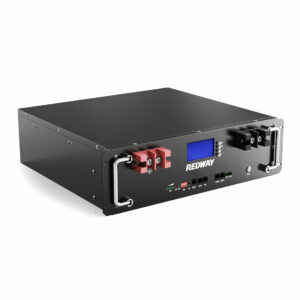
Eco-friendly battery options for data centers include lithium iron phosphate (LiFePO4), flow batteries, and advanced lead-carbon systems. These prioritize low carbon footprint, recyclability, and energy density, with LiFePO4 offering 10+ year lifespans and flow batteries enabling scalable renewable storage.

What Powers Cell Towers During Outages? Telecom Battery Essentials
How do LiFePO4 batteries reduce environmental impact?
LiFePO4 batteries eliminate cobalt/nickel, using non-toxic iron/phosphate with 95% recyclability. Their 4,000+ cycle life at 80% depth of discharge (DoD) reduces replacement frequency versus traditional VRLA batteries.
Beyond material safety, LiFePO4’s 98% round-trip efficiency cuts energy waste compared to 80-85% efficiency in lead-acid systems. For a 10MW data center, this difference saves ~1.3GWh annually – equivalent to 900 metric tons of CO2. Pro tip: Pair LiFePO4 with AI-driven charge controllers to optimize cycles based on grid carbon intensity. Imagine a Tesla Powerpack scaled for data centers: Google’s Belgium facility uses similar systems to shave 30% off diesel generator reliance.
What makes flow batteries sustainable for large-scale storage?
Flow batteries use liquid electrolytes (often vanadium or zinc-bromine) stored externally, enabling 20,000+ cycles without degradation. Their 99% recyclable components and non-flammable chemistry make them ideal for renewable integration.

Practically speaking, flow batteries decouple power and energy capacity – you can scale storage duration (4-12+ hours) by simply increasing electrolyte tank size. Take Microsoft’s Wyoming project: A 200kW/800kWh vanadium flow battery pairs with wind turbines, providing 10-hour backup with zero thermal runaway risk. But what about costs? While upfront prices hover around $500/kWh (double LiFePO4), 30-year lifespans make total cost 40% lower. Pro tip: Time electrolyte refurbishment with regional hazardous waste collection drives to minimize transport emissions.
| Type | Cycle Life | Recyclability |
|---|---|---|
| Vanadium Flow | ∞ (electrolyte only) | 98% |
| Zinc-Bromine | 10,000 | 85% |
What Determines Telecom Battery Weight?
Can sodium-ion batteries replace lithium in data centers?
Sodium-ion batteries leverage abundant sodium reserves for 30% lower material costs vs lithium. Recent breakthroughs achieve 160Wh/kg density – suitable for UPS systems requiring 5-15 minute bridging.
Though not yet mainstream, companies like CATL are deploying sodium-ion in hybrid lithium-sodium configurations. These systems use sodium for frequent shallow cycles and lithium for peak demands, extending lifespan by 50%. However, their lower voltage (3.0V) requires redesigning power electronics. Imagine replacing diesel gensets: Swedish data center operator EcoDataCenter uses sodium-ion buffers to handle 90-second grid dips, saving 200 tons/year in fuel.
How do advanced lead-carbon batteries compare?
Modern lead-carbon batteries add carbon nanotubes to lead plates, boosting cycle life to 3,000 cycles at 50% DoD while maintaining 99% recycling rates. They’re 40% cheaper than LiFePO4 upfront but require more space.
For data centers with existing lead-acid infrastructure, upgrading to lead-carbon can cut replacement costs by 60%. Equinix’s LD6 London facility uses them for partial UPS loads, achieving 88% efficiency. But there’s a catch: They still contain lead, requiring strict OSHA-compliant handling. Pro tip: Deploy in modular racks with integrated ventilation – Amazon’s Virginia campus reduced installation time by 70% this way.
| Metric | Lead-Carbon | LiFePO4 |
|---|---|---|
| Cycle Life | 3,000 | 6,000 |
| $/kWh | $150 | $400 |
What role do supercapacitors play in green energy storage?
Supercapacitors provide 500,000+ cycles for millisecond response to power fluctuations. Though low energy density (5-10Wh/kg), they pair perfectly with batteries – handling peak loads while reducing battery stress.
Think of them as shock absorbers: When a data center’s cooling system suddenly draws 2MW, supercapacitors deliver 80% of that surge, preventing battery depletion. Lawrence Berkeley Lab’s prototype cut battery wear by 40% using this hybrid approach. Warning: Supercapacitors self-discharge at 10-20%/day – don’t use them for >15 minute backups.
FAQs
Are LiFePO4 batteries safe for indoor data centers?
Yes, with UL 9540A-certified systems. Their thermal runaway threshold is 200°C+ vs 150°C for NMC lithium-ion.
How to dispose of flow battery electrolytes?
Vanadium electrolytes are reusable indefinitely; zinc-bromine requires neutralization via licensed chemical processors.
Do sodium-ion batteries work in cold climates?
Performance drops below -20°C (-4°F) – always pair with thermal management systems in Arctic regions.
