
What are the disadvantages of a rack server?
Rack servers offer high-density computing but face challenges like significant upfront infrastructure costs, demanding cooling requirements, and complex maintenance workflows. Their vertical stacking design creates heat concentration risks, while limited physical access components replacement. Noise levels exceeding 60dB often restrict deployment to specialized data centers rather than office environments.

What are the physical limitations of rack servers?
Rack servers require standardized 19-inch rack enclosures, limiting deployment flexibility. Their 1U-4U height configurations (1.75″-7″ tall) restrict component sizes—larger GPUs or storage arrays often need horizontal expansion. Pro Tip: Use sliding rails with 100kg+ weight capacity to prevent chassis warping in multi-server installations.
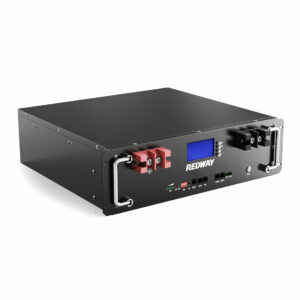
Beyond spatial constraints, the vertical stacking architecture creates thermal bottlenecks. A fully loaded 42U rack can generate 25+ kW heat output, necessitating precision cooling systems. For example, HP’s ProLiant DL380 Gen11 in 2U format requires 400 CFM airflow—equivalent to 3 household HVAC systems. Transitioning to liquid cooling adds 30% infrastructure costs but reduces energy use by 40%.
How do maintenance challenges impact operations?
Hot-swap complexity increases with rack density. Front-access drive bays help, but replacing PSUs or motherboard components often requires partial rack dismantling. Average repair time jumps from 15 minutes (tower servers) to 45+ minutes in dense racks.
Consider cable management nightmares: A 42U rack with 20 dual-PSU servers needs 40 power cables plus 80+ network lines. Without proper labeling, troubleshooting becomes error-prone. Transitional phrase: While tool-less designs help, technicians still need specialized lifters for servers exceeding 25kg. Did you know? Dell’s cable armors reduce bend radius to 0.5″, saving 35% rear clearance space.

| Maintenance Factor | Tower Server | Rack Server |
|---|---|---|
| Component Access Time | 2 minutes | 8 minutes |
| PSU Replacement Steps | 3 steps | 7 steps |
RackBattery Expert Insight
FAQs
Are rack servers louder than tower units?
Yes, operating at 60-80 dB versus 40-50 dB for towers. Always install acoustic panels in server rooms exceeding 70 dB.
Can I retrofit old racks for new servers?
Only with EIA-310-D compliance checks—mismatched mounting holes cause vibration damage. Use conversion kits for pre-2012 racks.
