
Can I use a 2000W inverter with a 100Ah battery?
Using a 2000W inverter with a 100Ah battery is theoretically possible but requires strict voltage compatibility and load management. A 12V 100Ah battery stores 1.2kWh (12V × 100Ah), which can theoretically power a 2000W load for ~36 minutes at 90% inverter efficiency. However, sustained 2000W draws demand ~167A from a 12V system, exceeding most lead-acid batteries’ 100A continuous discharge limits, risking voltage sag or damage. Lithium (LiFePO4) batteries handle higher currents but still require proper BMS and cooling. Always match inverter voltage to the battery bank (e.g., 48V systems reduce current to ~42A for 2000W).

What factors determine inverter-battery compatibility?
Voltage alignment and current limits are critical. A 12V 2000W inverter requires 167A, but most 100Ah lead-acid batteries max out at 100A. Mismatched voltages (e.g., 48V battery with 12V inverter) necessitate DC-DC converters, adding inefficiency. Pro Tip: Use a 48V battery system to halve current demands—2000W at 48V pulls only 42A, well within 100Ah LiFePO4 capabilities.
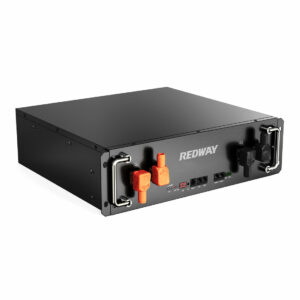
Beyond basic voltage math, battery chemistry dictates performance. Lead-acid batteries suffer voltage drop under high loads, reducing effective capacity by 20–30%. For example, a 12V 100Ah AGM battery running a 1500W microwave might only deliver 800Wh instead of 1,200Wh due to Peukert’s effect. Lithium iron phosphate (LiFePO4) batteries maintain stable voltage even at 1C discharge rates (100A for 100Ah), making them better suited for high-power inverters. But what happens if you ignore current limits? Continuous overcurrent triggers BMS shutdowns in lithium packs or accelerates plate corrosion in lead-acid units. Transitioning to higher voltage systems (24V or 48V) is the safest path for 2000W+ loads.
How long can a 100Ah battery run a 2000W inverter?
Runtime depends on load percentage and battery efficiency. At full 2000W load, a 12V 100Ah lithium battery lasts ~0.5 hours (1.2kWh ÷ 2000W × 0.9 efficiency). For 500W loads, runtime extends to ~2 hours. Pro Tip: Derate lead-acid batteries by 40%—a 100Ah AGM provides only 720Wh usable energy (1.2kWh × 0.6) due to depth-of-discharge and Peukert losses.
Practically speaking, real-world usage rarely involves full-load operation. A 2000W inverter powering intermittent loads like refrigerators (150W) or power tools (1,000W bursts) could last 4–8 hours. However, sustained high draws—like running a 1,800W air conditioner—will drain even lithium batteries in under an hour. Let’s break it down: A 48V 100Ah LiFePO4 pack holds 4.8kWh. Running a 1,000W load with 90% inverter efficiency consumes 1,111W per hour (1,000 ÷ 0.9), yielding ~4.3 hours runtime. Always size batteries for 20% longer than calculated to account for aging and voltage drop.

| Battery Type | Usable Energy (100Ah) | 2000W Runtime |
|---|---|---|
| Lead-Acid (12V) | 720Wh | ~22 minutes |
| LiFePO4 (12V) | 1,080Wh | ~33 minutes |
| LiFePO4 (48V) | 4,320Wh | ~2.3 hours |
RackBattery Expert Insight
FAQs
Can I connect multiple 100Ah batteries for a 2000W inverter?
Yes, but wire them correctly. For 12V systems, parallel connections increase capacity (e.g., 2×100Ah = 200Ah), while series connections boost voltage (24V or 48V). Use 48V in series for 2000W to keep currents below 50A.
Will a 2000W inverter kill my car battery?
Absolutely. Car batteries aren’t designed for deep cycles—even 10 minutes at 2000W (167A) can permanently damage a 60Ah automotive lead-acid battery.
What is the maximum runtime for a 2000W inverter on a 12V 100Ah battery?
At full load, a 12V 100Ah battery can run a 2000W inverter for about 20-30 minutes, due to the battery’s limited energy capacity of 1200 watt-hours and the inverter’s high power demand.
How does battery type affect inverter runtime?
Lithium batteries, like LiFePO4, offer better continuous current capacity and can handle higher surge loads compared to lead-acid batteries. This allows for longer and more efficient operation with less strain on the battery, making them ideal for powering inverters.
What is the recommended battery discharge limit for longer life?
For lead-acid batteries, it’s recommended to discharge only to 50% of their total capacity to extend their lifespan. This limits you to 600 watt-hours of usable power from a 100Ah 12V battery, ensuring the battery remains functional for a longer period.
How long can a 2000W inverter run on a 362Ah battery bank?
A 362Ah battery bank (12V) can theoretically run a 2000W inverter for up to two hours, as it provides about 4320 watt-hours of energy. However, this depends on inverter efficiency and other factors like battery condition.
What role does inverter efficiency play in battery runtime?
Inverter efficiency, typically around 90%, directly impacts battery runtime. A less efficient inverter wastes more energy, reducing the effective runtime. For a 2000W inverter, this means it will consume more battery power to produce the same output.
How can Battery Management Systems (BMS) protect my battery?
BMS (Battery Management Systems) protect batteries from over-discharge by monitoring voltage levels, current, and temperature. In cases of high load or potential damage, BMS can shut down the battery to prevent failure, ensuring longer life and safe operation.
What are the wiring and cable considerations for high-power inverters?
Using appropriately sized wires and cables is crucial to prevent overheating, voltage drops, and power loss. For high-power setups, ensure cables are rated for the current draw and are properly insulated to handle the inverter’s power demands.
What is the best solution for long-term inverter use?
For sustained usage of a 2000W inverter, it’s advisable to use a larger battery bank with either higher capacity (Ah) or increased voltage via a series connection. Lithium-based solutions, like those from RackBattery, are ideal for these applications due to their high performance and long cycle life.
