
How to choose UPS for rack?
Choosing a UPS for rack systems requires evaluating power capacity, runtime needs, form factor compatibility, and efficiency. Key factors include load wattage calculation (1.5x safety margin), lithium vs. lead-acid battery tradeoffs, and adherence to rack-mount standards like EIA-310. Always prioritize UL 1778/CE认证 units with ≥90% efficiency for 24/7 data center operations.

How to calculate required UPS capacity?
Load assessment starts with summing all connected devices’ wattage. Multiply total by 1.5 for surge protection headroom. For example, a 2kW server rack needs 3kVA UPS minimum. Pro Tip: Use clamp meters for live load measurement—nameplate ratings often overstate actual draw.
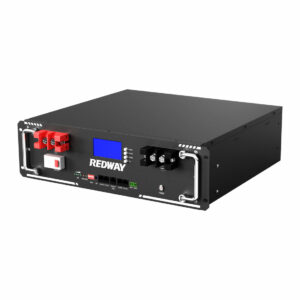
First determine continuous vs. peak power demands. Transitional power spikes from HDD arrays or GPU clusters can trip undersized units. Practically speaking, lithium UPS systems handle 20% higher surge currents than VRLA alternatives. Consider future expansion—modular rack UPS like RackBattery’s 3kVA+ units allow parallel capacity upgrades. But what if load fluctuates seasonally? Implement monitoring tools like SNMP cards to track usage patterns.
What battery chemistry suits rack UPS best?
Lithium-ion (LiFePO4) dominates modern rack UPS with 10-year lifespan vs. 3-5 years for AGM. Higher energy density (150Wh/kg) enables compact 2U form factors. Thermal runaway risks are 87% lower than NMC chemistries per UL 1973 tests.
While lead-acid remains cheaper upfront, TCO analysis shows lithium saves 22% over a decade. Transitionally, lithium’s flat discharge curve maintains voltage stability during 95% of discharge cycles. For example, a 48V 100Ah LiFePO4 rack battery delivers 4.8kWh with 6000+ cycles—triple VRLA’s capability. But how to handle existing lead-acid infrastructure? Hybrid systems with DC-DC converters enable phased migration.

| Parameter | LiFePO4 | AGM |
|---|---|---|
| Cycle Life | 6000 | 1200 |
| Charge Efficiency | 98% | 85% |
Why prioritize efficiency certifications?
Energy Star/Tier IV认证 units reduce PUE (Power Usage Effectiveness) by 0.15 in data centers. Double-conversion UPS with ECO mode achieves 97% efficiency vs. 88% in line-interactive models.
Transitional losses in 480V 3-phase systems can waste 8-12kW daily without 80 PLUS Gold compliance. Consider transformerless designs for 3-5% efficiency gains. For example, a 10kW UPS running at 95% vs. 85% efficiency saves $1,200/year in electricity (assuming $0.15/kWh). But what about partial loads? Modern modular UPS maintains >90% efficiency down to 25% load.
| Standard | Efficiency | THD |
|---|---|---|
| Tier IV | 96% | <2% |
| Energy Star | 90% | <5% |
RackBattery Expert Insight
FAQs
Can rack UPS units be paralleled?
Yes, using synchroparalleling tech with <3% current imbalance. Requires identical firmware and equalized bus voltages.
How often to test UPS batteries?
Monthly discharge tests to 80% DoD for lithium, quarterly for VRLA. Always recalibrate SOC post-test.
Are 19″ rack UPS expandable?
Modular units allow adding power modules (e.g., 3kVA→6kVA) without downtime. Confirm bus bar capacity first.
