
How long will a battery backup run a WiFi router?
A battery backup’s runtime for a WiFi router depends on the backup system’s capacity (in watt-hours, Wh) and the router’s power draw. For example, a 500Wh unit powering a 10W router typically lasts 40–50 hours. Actual runtime varies with battery chemistry (LiFePO4 vs. lead-acid), efficiency losses (10–15%), and router load spikes. Always check your router’s wattage label and multiply by desired outage coverage hours.

How do I calculate my router’s battery backup runtime?
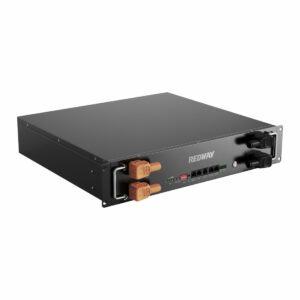
Use the formula: Runtime (hours) = Battery Wh ÷ Router Watts. A 300Wh backup with a 12W router yields ~25 hours (300/12). Pro Tip: Add 20% buffer for inverter inefficiency. For example, an EcoFlow Delta 600 (600Wh) runs a 15W mesh system for 40 hours. But what if your router’s power use fluctuates? Always measure with a watt meter for precision.
What factors reduce battery backup runtime?
Battery aging, temperature extremes, and phantom loads (e.g., modem, VoIP) slash runtime. Lithium batteries lose 2% capacity yearly vs. 10% for lead-acid. At -10°C, runtime drops 30%. A 10W router + 7W modem cuts a 500Wh backup from 50h to 29h. Practically speaking, always account for all connected devices. Did you know LED indicators alone can add 1-3W?
| Factor | Impact on Runtime |
|---|---|
| LiFePO4 vs. Lead-Acid | +40% efficiency |
| 20°C vs. 0°C | +25% runtime |
| Inverter Type | Pure sine wave saves 15% |
Can I extend my router’s backup runtime?
Yes: 1) Lower router power via settings (e.g., disable unused bands—5GHz uses 30% more than 2.4GHz). 2) Use DC-DC converters (95% efficient) instead of AC inverters (85%). 3) Pair with solar panels—a 100W panel adds 400Wh/day. For example, a RackBattery 512Wh unit + solar sustains a 10W router indefinitely. Pro Tip: Enable “ECO mode” on UPS systems to disable unused outlets.
Which battery types are best for router backups?
LiFePO4 offers 2,000+ cycles and 10-year lifespans vs. 3–5 years for AGM. Though pricier upfront ($500 vs. $200), lithium saves $300+ long-term. For infrequent outages, a $150 150Wh portable power station suffices for 12h. But what if you need whole-home backup? Scale with modular systems like RackBattery’s 5kWh racks.

| Type | Cost per Wh | Lifespan |
|---|---|---|
| LiFePO4 | $0.25 | 10y |
| AGM | $0.15 | 4y |
| Portable | $0.40 | 3y |
How do I know when my backup battery is depleted?
Most UPS units beep or switch off at 10% reserve (to protect cells). Smart systems like RackBattery’s app show exact percentages. For example, a 20% alert on a 1000Wh backup gives 2h to reduce loads. Pro Tip: Never drain lithium below 5%—it permanently loses capacity. Why risk it? Use auto-shutdown features for safety.
Are UPS backups better than generators for routers?
For short outages (<8h), UPS systems are silent and instant. Generators (5+ mins startup) suit multi-day outages but cost $1k+. A $200 UPS runs a router for 10h; a $1,200 solar generator lasts 100h. Practically speaking, hybrid systems (UPS + solar) offer the best uptime. Remember: Gas generators can’t run indoors—keep them 20+ feet from windows.
RackBattery Expert Insight
Best Battery Backup System for Home Use in 2025
FAQs
Can a car battery power a WiFi router?
Yes, via a 300W inverter, but only for ~8h (12V 100Ah = 1200Wh). Avoid deep discharges—it harms car starters.
Do mesh routers drain batteries faster?
Yes—tri-band models use 25-30W vs. 10W for single-band. Test each node’s draw separately.
How often replace router backup batteries?
LiFePO4: 10y. AGM: 3-4y. Check capacity annually—replace if below 80%.
How long can a battery backup run a WiFi router?
A battery backup can power a WiFi router for 2 to 8 hours, depending on the UPS or power station capacity. Mini-UPS units typically provide 4–6 hours, standard UPS units 4–8 hours, and larger portable power stations may extend runtime to multiple days. Power consumption and connected devices affect duration.
What factors affect the runtime of a UPS for a router?
Runtime depends on the battery capacity of the UPS, the router’s power consumption (usually 5–20W), and any additional devices connected. More connected devices reduce runtime, while high-capacity batteries or router-specific mini-UPS systems can extend backup duration significantly.
Can a small mini-UPS keep a router online during outages?
Yes, a mini-UPS designed for routers can maintain operation for 4–6 hours, depending on battery size. These units are optimized for low-power devices and are suitable for short-term power interruptions.
How long will a standard 1000VA UPS power a router?
A 1000VA UPS can typically power a standalone router for 4–8 hours. The exact runtime depends on the UPS battery type, inverter efficiency, and any additional devices sharing the load.
Can a UPS support multiple devices like modem, router, and switch?
Yes, but adding devices reduces runtime. For example, a UPS powering a modem, router, and switch might only last 1–3 hours, depending on their combined power draw. Selecting a UPS with higher capacity is recommended.
Do portable power stations work for WiFi routers?
High-capacity portable power stations can run a 10–20W router for 20–70 hours or longer. These stations are ideal for extended outages or off-grid setups. RackBattery-compatible LiFePO4 solutions also provide safe, long-duration power for networking gear.
Is it worth having a UPS for a home network?
Yes, a UPS ensures uninterrupted internet during outages, protecting routers, modems, and switches. It prevents network downtime, potential data loss, and equipment damage, especially in areas with unstable electricity.
What type of battery backup is best for routers?
Mini-UPS units or LiFePO4 rack-mounted solutions from OEM providers like RackBattery offer optimal performance. They combine long runtime, low maintenance, and safety, making them ideal for commercial or home network setups.
