
What size battery bank do I need to run my house?
To power your entire house, calculate your daily energy consumption (kWh), multiply by days of autonomy desired, then divide by battery depth of discharge (DoD). For example, a home using 10 kWh/day with 3 days backup and 80% DoD needs a 37.5 kWh bank. Lithium-ion batteries (LiFePO4/NMC) are preferred for their 90–95% DoD, while lead-acid requires larger banks due to 50% DoD limits.

How do I calculate my home’s daily energy consumption?
Daily energy consumption is the total kWh your household uses in 24 hours. Track usage via utility bills or energy monitors, then sum critical loads (fridge, AC, lights). Pro Tip: Multiply appliance wattage by runtime hours—e.g., a 1,000W AC running 5 hours consumes 5 kWh daily
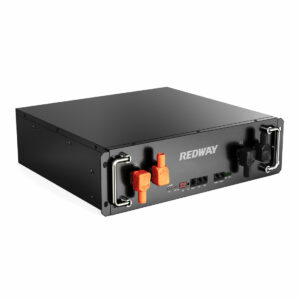
Beyond basic math, consider seasonal variations. Winter heating or summer AC can spike usage by 30–50%. For accuracy, analyze 12 months of bills. Practically speaking, a 2,000 sq.ft. home averages 20–30 kWh/day, while off-grid cabins may use 5–10 kWh. For example, a family using 25 kWh daily needs a 75 kWh battery for 3-day autonomy (25 kWh × 3 days).

| Appliance | Wattage | Daily Use (hrs) |
|---|---|---|
| Refrigerator | 150W | 24 |
| AC Unit | 3,500W | 6 |
| LED Lights | 10W | 10 |
What are “days of autonomy” and why do they matter?
Days of autonomy determine how long your battery bank can power your home without grid/solar recharge. More days mean larger banks but higher reliability during outages or cloudy weather. Pro Tip: Urban homes may opt for 1–2 days, while off-grid systems need 3–5.
Why prioritize autonomy? If your solar panels can’t recharge for days (e.g., storms), undersized batteries leave you in the dark. For instance, a 30 kWh system with 3-day autonomy covers 90 kWh total. However, lithium’s higher DoD reduces bank size—compare 30 kWh LiFePO4 (90% DoD) vs. 60 kWh lead-acid (50% DoD).
| Days | Battery Size (LiFePO4) | Cost Estimate |
|---|---|---|
| 2 | 20 kWh | $6,000 |
| 4 | 40 kWh | $12,000 |
How does depth of discharge (DoD) affect battery bank sizing?
Depth of discharge (DoD) is the usable percentage of a battery’s capacity. Lithium-ion allows 90–95% DoD, while lead-acid limits to 50%. Lower DoD requires larger banks—e.g., 10 kWh usable needs a 20 kWh lead-acid vs. 11 kWh lithium.
Think of DoD as a fuel tank’s “safe” zone. Draining lead-acid below 50% regularly degrades lifespan, whereas lithium handles deep cycles. For a 30 kWh daily load, a lithium bank would be 30 kWh ÷ 0.9 = 33.3 kWh, while lead-acid needs 30 ÷ 0.5 = 60 kWh. Beyond cost, weight and space matter—60 kWh lead-acid weighs ~1,500 lbs vs. 330 lbs for lithium.
Which battery chemistry is best for home backup?
Lithium-ion (LiFePO4) outperforms lead-acid in energy density, lifespan (3,000–5,000 cycles), and DoD. Though pricier upfront, lithium’s 10–15-year lifespan beats lead-acid’s 3–5 years. Pro Tip: Choose NMC for compactness or LiFePO4 for safety in high temps.
But what if budget is tight? Sealed lead-acid (SLA) costs half initially but needs replacement every 3 years. For example, a 20 kWh SLA bank ($3,000) lasts 5 years with maintenance, while lithium ($7,000) lasts 15. Rural homes without fire codes may prefer flooded lead-acid, but their venting requirements complicate indoor installation.
How does inverter efficiency impact battery sizing?
Inverter efficiency (90–97%) determines how much battery power reaches appliances. A 90% efficient inverter forces a 10 kWh load to draw 11.1 kWh from batteries. Pro Tip: High-frequency inverters hit 97% but cost 20% more—worth it for large systems.
Imagine filling a leaky bucket—lower efficiency means more “spillage.” For a 30 kWh daily load, a 95% inverter requires 31.6 kWh (30 ÷ 0.95), while 90% needs 33.3 kWh. Over 10 years, that 5% loss adds 730 kWh wasted. Hybrid inverters with solar passthrough can mitigate losses, but ensure compatibility with your battery’s voltage.
Can I expand my battery bank later?
Yes, but only with modular systems. Lithium’s scalability lets you add packs in parallel, while lead-acid requires full bank replacement. Pro Tip: Buy batteries with identical specs—mixing old/new degrades performance.
For example, RackBattery’s 48V rack units stack up to 10 in parallel, scaling from 5 kWh to 50 kWh. However, older lead-acid banks can’t merge with new ones due to resistance mismatches. Practically speaking, plan for future needs—oversize wiring and charge controllers during initial install.
RackBattery Expert Insight
FAQs
Can I use my existing solar panels with a new battery bank?
Yes, if voltage aligns—48V batteries need 60–150V solar arrays. MPPT charge controllers bridge mismatches, but consult specs first.
How long will a battery bank power my home during an outage?
Depends on usage and size. A 20 kWh bank runs essentials (fridge, lights) for 24–48 hours; full-home backup needs 30+ kWh.
Is lithium worth the higher upfront cost?
Yes—long-term savings outweigh initial cost. Lithium lasts 3x longer than lead-acid, with half the maintenance.
Can I mix battery brands in a bank?
Never—internal resistance variances cause imbalance. Stick to identical models and production batches.
