
How To Integrate Battery Racks With Solar Power?
Integrating battery racks with solar power requires compatible voltage systems, MPPT charge controllers, and modular rack designs. Prioritize LiFePO4 batteries for high cycle life and thermal stability. Use DC-coupled systems for large installations and BMS synchronization to prevent overcharging.
What Powers Cell Towers During Outages? Telecom Battery Essentials

What battery chemistry works best for solar integration?
LiFePO4 (lithium iron phosphate) dominates solar storage due to 4,000+ cycles and thermal safety. Unlike lead-acid, it handles partial state-of-charge without degradation. Nickel-manganese-cobalt (NMC) offers higher density but risks thermal runaway.
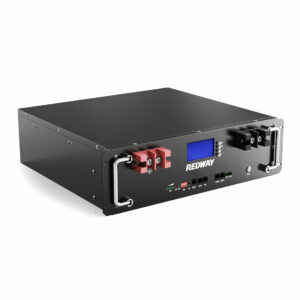
Beyond chemistry selection, voltage alignment is critical. Solar arrays typically output 48V DC, matching most LiFePO4 rack systems. For larger installations, 1500V DC architectures reduce transmission losses. Pro tip: Use bidirectional inverters to enable both charging and discharging through one device. But what happens if your battery voltage range doesn’t match the solar inverter? Mismatches cause clipping losses or shutdowns. For example, a 52V LiFePO4 rack connected to a 48V inverter will waste 8% of stored energy. Always verify Voc (open-circuit voltage) compatibility between panels and batteries. Transitional phrase: Moving beyond voltage, temperature management ensures longevity. LiFePO4 performs optimally between -20°C to 50°C, while NMC degrades rapidly above 45°C.
How to size battery racks for solar arrays?
Calculate daily kWh consumption and multiply by days of autonomy. Add 20% buffer for inefficiencies. For 30kWh/day needs with 3-day backup, size for 108kWh (30 x 3 x 1.2).
Practically speaking, solar irradiance variability demands smart sizing. In cloudy climates, derate panel output by 30-40%. A 10kW solar array in Arizona produces 16kWh/day in winter but only 9kWh/day in Michigan. Transitional phrase: Beyond raw math, consider depth of discharge (DoD). LiFePO4 allows 90% DoD versus 50% for lead-acid – effectively doubling usable capacity. How do you future-proof? Install modular racks that let you add batteries incrementally. Real-world example: A Texas farm started with 40kWh storage but expanded to 120kWh over two years without replacing inverters.

| Parameter | LiFePO4 | Lead-Acid |
|---|---|---|
| Usable Capacity | 90% | 50% |
| Cycle Life @80% DoD | 4,000 | 500 |
Which inverters support solar-battery synchronization?
Hybrid inverters like Sol-Ark 15K or Victron MultiPlus-II manage AC/DC coupling. They prioritize solar consumption, then charge batteries, and export excess to grid. DC-coupled systems require MPPT solar charge controllers with battery profiles.
Transitional phrase: While hardware matters, software integration is equally vital. Inverters must communicate with battery racks via CAN bus or RS485 protocols. SMA Sunny Island uses Sunny WebConnect to coordinate up to 12 inverters in parallel. But what if your inverter lacks LiFePO4 presets? Third-party controllers like Batrium Watchmon can translate protocols. Pro tip: For off-grid systems, select inverters with zero-grid-tie modes to avoid regulatory issues. Real-world example: A Colorado microgrid uses Outback Radian inverters with Pylontech racks, achieving 98% round-trip efficiency through CAN synchronization.
What Are the Key Types and Specifications of Telecom Batteries?
FAQs
Can I retrofit existing solar systems with battery racks?
Yes, using AC-coupled storage add-ons like Tesla Powerwall or Enphase IQ Battery. Ensure your inverter has frequency-watt control to manage bidirectional flow.
How often should battery racks be maintained?
LiFePO4 requires annual voltage checks and terminal cleaning. Monitor cell balancing via BMS software monthly – imbalances over 50mV need manual correction.
