
Which UPS gives 4 hours backup?
UPS systems providing 4-hour backup require customized configurations with extended battery banks. Most standard UPS units offer 30 minutes to 2 hours, but achieving 4+ hours demands high-capacity lithium or lead-acid batteries matched to load requirements. For example, a 5kW load requires ≈20kWh storage (e.g., 48V 400Ah LiFePO4 system). Enterprise-grade UPS models like Huawei UPS5000 series support modular battery expansion for prolonged runtime. Pro Tip: Always derate battery capacity by 20% to account for aging and efficiency losses.

What factors determine UPS backup time?
Backup duration depends on battery capacity (Ah), load power (W), and system voltage. Using the formula (Battery Ah × Voltage) ÷ Load Watts = Hours, a 48V 200Ah battery with 1,200W load provides ≈8 hours. Real-world efficiency losses typically reduce this by 15–25%.
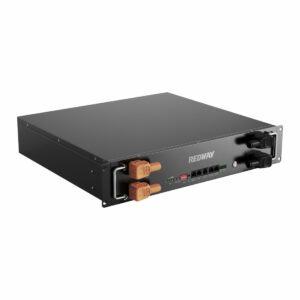
Transitional runtime calculations must consider three core variables: energy storage capacity, power demand, and conversion efficiency. For enterprise applications, battery strings often combine multiple 12V or 48V modules in series-parallel configurations. A 48V 400Ah LiFePO4 system storing 19.2kWh could theoretically power a 3kW server rack for 6.4 hours – but derating to 80% usable capacity brings it down to 5.1 hours. Pro Tip: Use double-conversion online UPS models for stable voltage during extended outages, as line-interactive types waste energy during frequent switching.
Which UPS types support 4-hour runtime?
Enterprise online UPS systems with external battery cabinets enable multi-hour backup. Modular platforms like Eaton 9PX or Vertiv Liebert EXM scale from 5kVA to 150kVA with runtime extensions. Unlike consumer-grade UPS, these support third-party battery racks through SNMP monitoring.
Beyond basic desktop units, industrial UPS solutions employ scalable architectures. For instance, a Schneider Electric Galaxy VS 10kVA UPS paired with four 48V 100Ah lithium battery cabinets achieves 4+ hours at 7kW load. Transitional systems often combine hybrid topologies – supercapacitors handle momentary outages while batteries sustain prolonged operations. Real-world example: Data centers using Tesla Powerpack integration with UPS achieve 8–12 hour backup through DC-coupled storage. Pro Tip: Opt for lithium batteries over lead-acid for 4+ hour applications – they occupy 60% less space with 3× faster recharge.

| UPS Type | Max Runtime | Expandable |
|---|---|---|
| Desktop | 30 mins | No |
| Rackmount | 2 hours | Yes |
| Enterprise | 10+ hours | Yes |
How to calculate required battery capacity?
Use the load (watts) × hours ÷ voltage × 1.2 formula. For 4 hours at 2kW using 48V: 2000 × 4 ÷ 48 × 1.2 = 200Ah. Always add 20% buffer for aging and conversion losses.
Transitional power requirements demand precise calculations. Suppose a medical facility needs 4-hour backup for 5kW equipment. Using 48V lithium batteries: (5000W × 4h) ÷ 48V = ≈417Ah. With 80% depth of discharge (DoD), actual capacity needed becomes 417Ah ÷ 0.8 = 521Ah. This translates to six 48V 100Ah battery modules. Real-world example: A telecom tower using 48V 600Ah NiCd batteries achieves 8-hour backup for 3kW radios. Pro Tip: Lithium batteries permit deeper discharge (90–100% DoD) vs lead-acid’s 50% limit – halving required physical capacity.
RackBattery Expert Insight
FAQs
Can I modify a standard UPS for 4-hour backup?
Only with compatible external battery packs – most consumer UPS lack expansion ports. Enterprise models like APC Smart-UPS XL accept extra battery modules.
What’s the cost difference between 1-hour and 4-hour UPS?
Expect 3–4× higher costs for 4-hour systems due to battery scaling. A 10kVA UPS with 1-hour backup costs ≈$8,000 vs $25,000+ for 4-hour lithium configurations.
